What We See When We Read

A book redesign of Peter Mendelsund’s text.
What We See When We Read

Book Design

Year

2026

Description

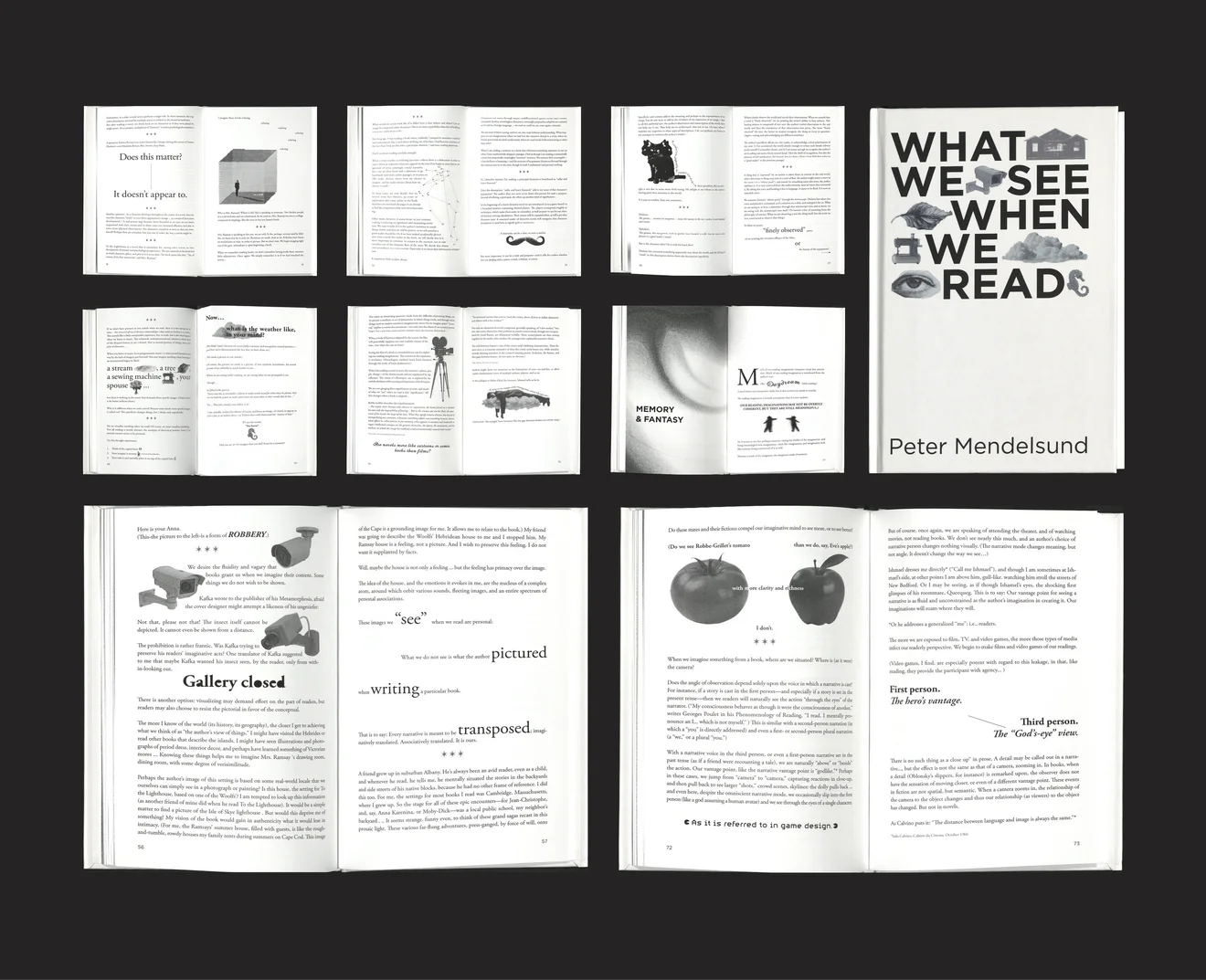
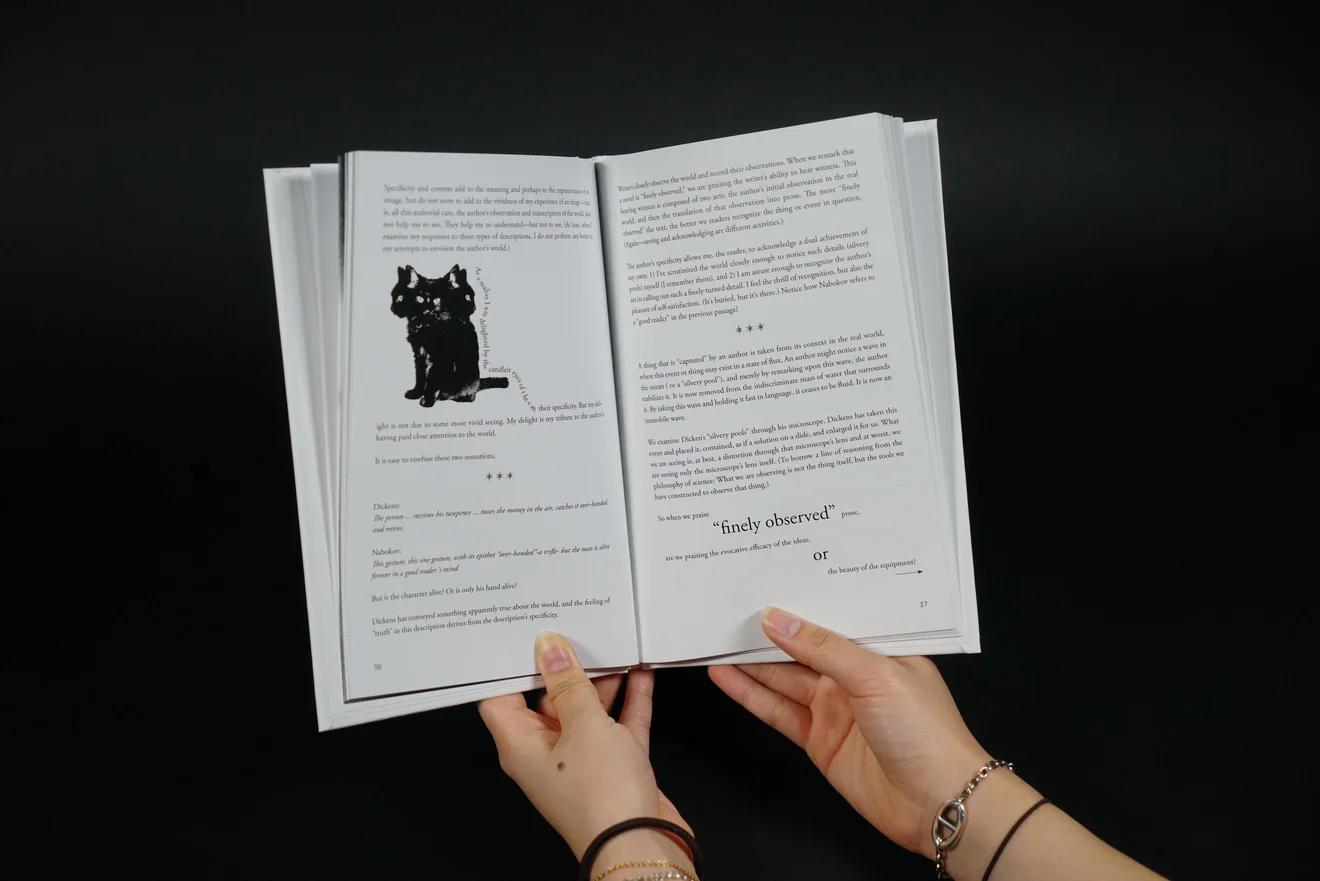
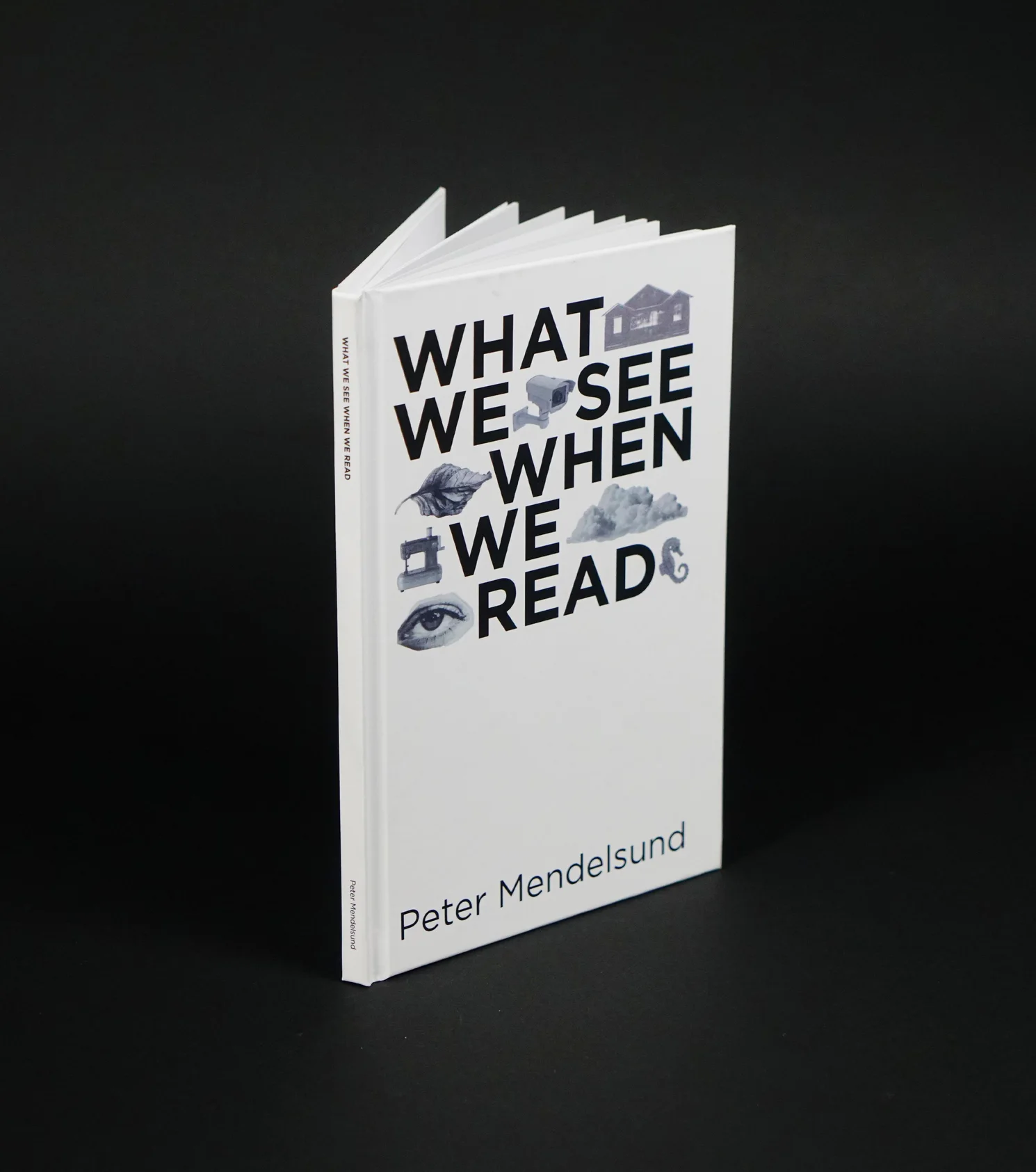
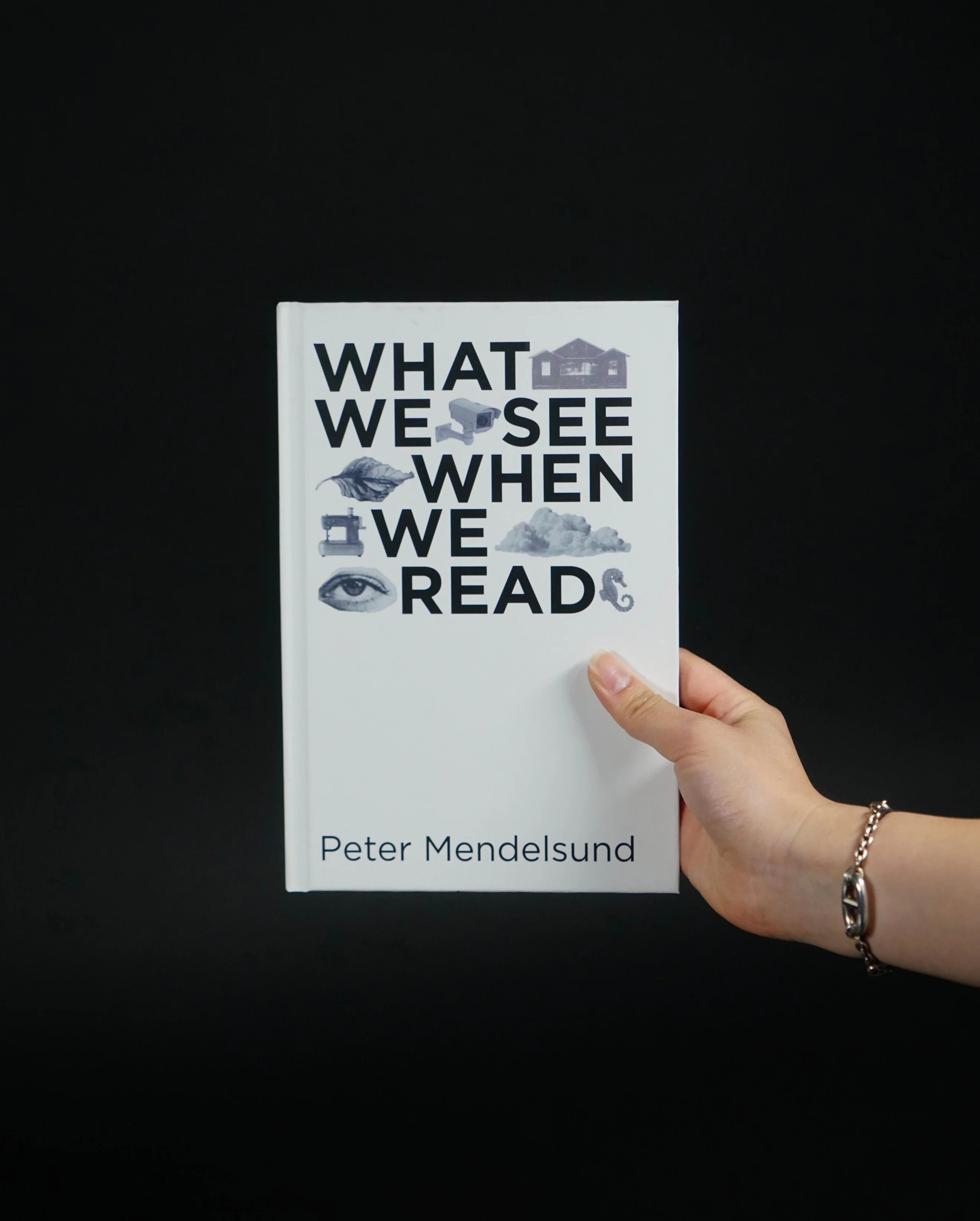
This book design reimagines What We See When We Read by Peter Mendelsund as a visual and spatial reading experience. Exploring themes of perception, imagination, and co-creation, the project investigates how typography and layout can shape the act of reading itself. Through shifts in scale, pacing, density, and white space, the book moves between moments of clarity and disruption, allowing text to expand, fragment, and pause across the page. Chapter openings, oversized initials, and isolated passages transform sections of the text into visual poems that mirror the fluid and often unstable nature of mental imagery while reading. Rather than functioning as decoration, compositional interventions respond directly to Mendelsund’s reflections on memory, abstraction, and visualization. The project examines how editorial design can turn a book from a passive container of text into an active perceptual experience.

Problem

Redesigning the Original Text

The original text needed a redesign that makes reading it more fun, readable, and engaging.

Solution

Reading as Visual Poetry

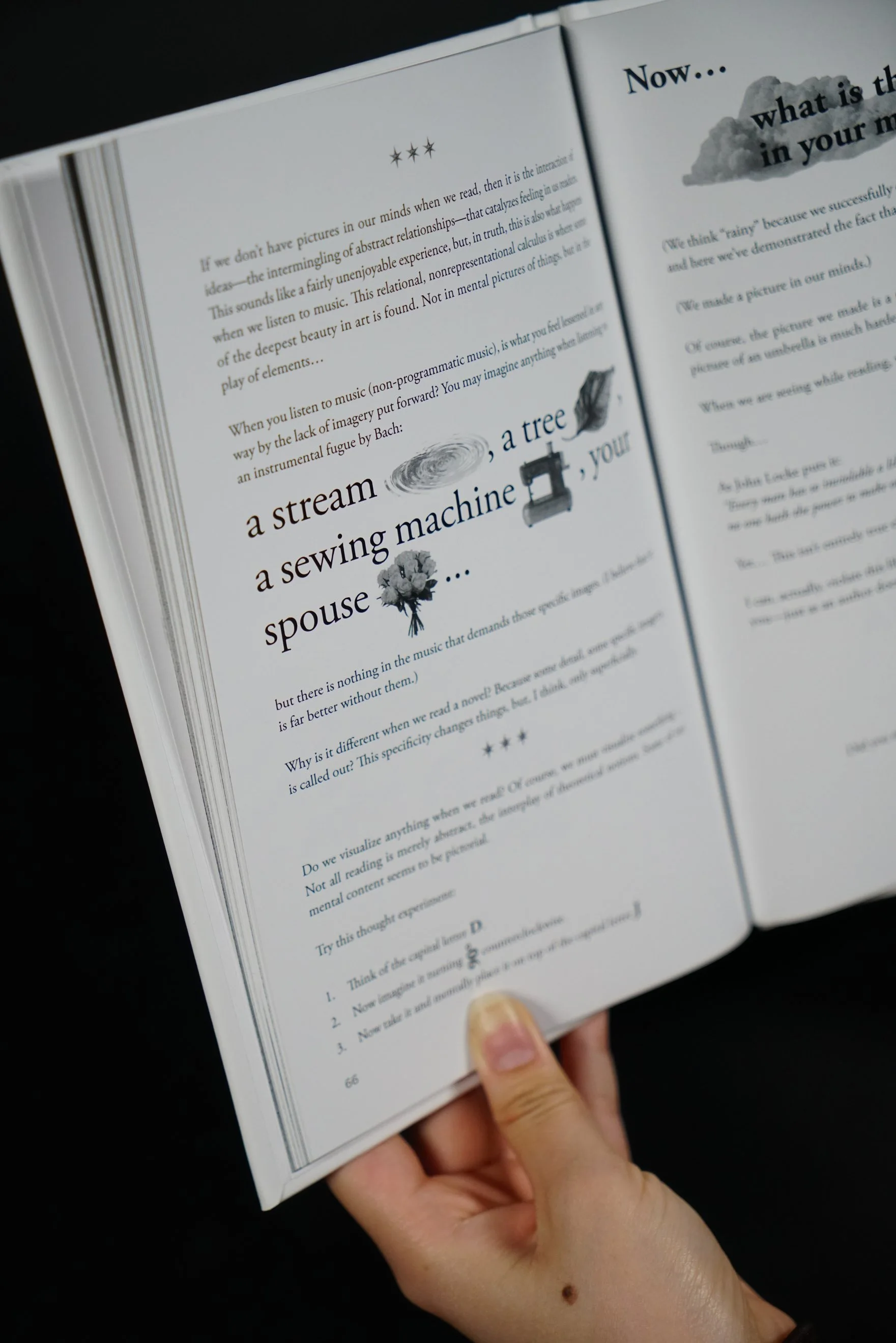
Different type play, shifts in scale and pacing, and open white space turn passages into visual poetry that is more engaging to read.
What We See When We Read

Chapter openings, oversized initials, and isolated passages become visual poems.
What We See When We Read

SCANNED SPREADS

What We See When We Read

More Works

What We See When We Read

A book redesign of Peter Mendelsund’s text.

What We See When We Read

Book Design

Year

2026

Description

This book design reimagines What We See When We Read by Peter Mendelsund as a visual and spatial reading experience. Exploring themes of perception, imagination, and co-creation, the project investigates how typography and layout can shape the act of reading itself. Through shifts in scale, pacing, density, and white space, the book moves between moments of clarity and disruption, allowing text to expand, fragment, and pause across the page. Chapter openings, oversized initials, and isolated passages transform sections of the text into visual poems that mirror the fluid and often unstable nature of mental imagery while reading. Rather than functioning as decoration, compositional interventions respond directly to Mendelsund’s reflections on memory, abstraction, and visualization. The project examines how editorial design can turn a book from a passive container of text into an active perceptual experience.

Problem

Redesigning the Original Text

The original text needed a redesign that makes reading it more fun, readable, and engaging.

Solution

Reading as Visual Poetry

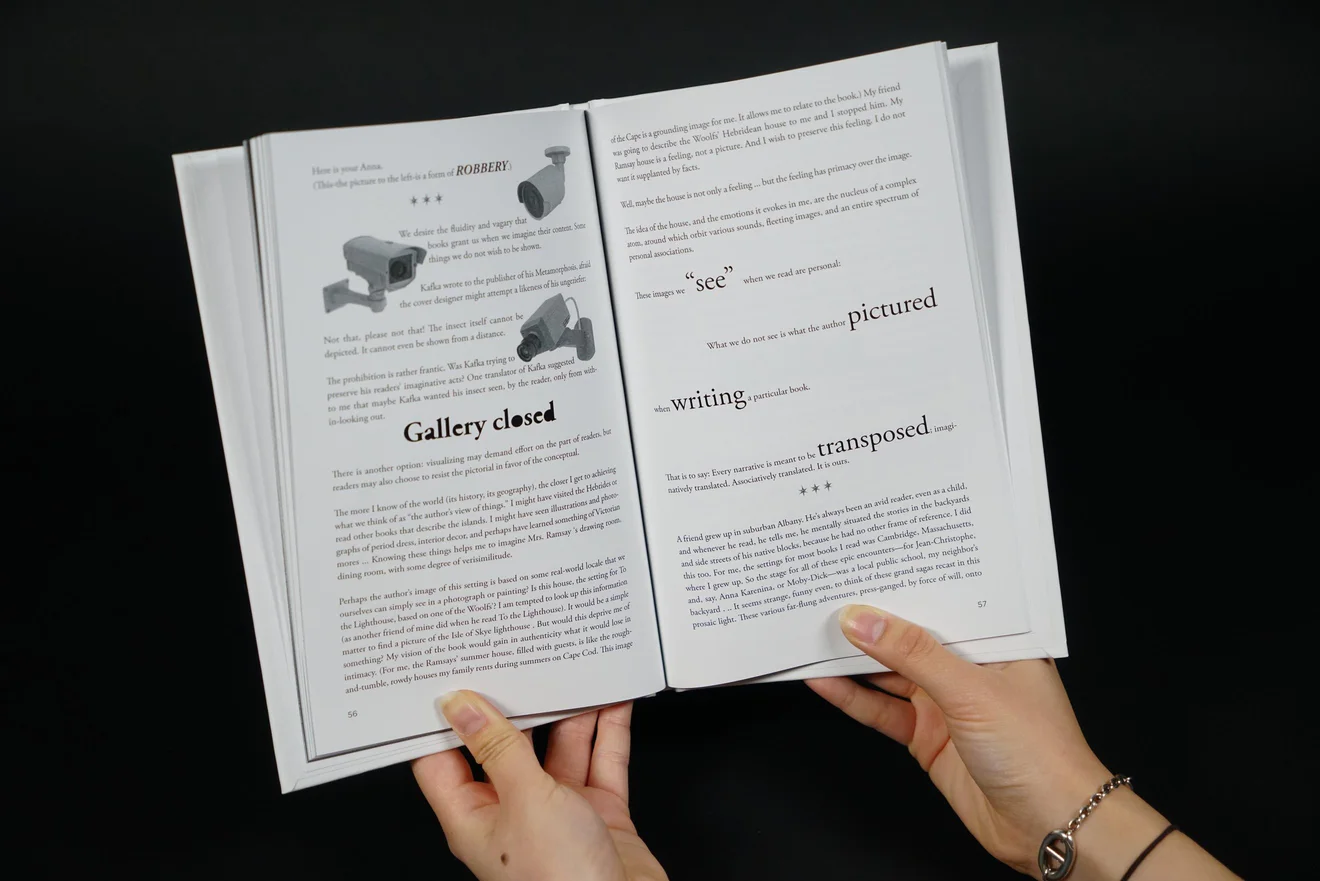
Different type play, shifts in scale and pacing, and open white space turn passages into visual poetry that is more engaging to read.

What We See When We Read

Chapter openings, oversized initials, and isolated passages become visual poems.
What We See When We Read

SCANNED SPREADS

What We See When We Read

More Works